
Table of Contents
Introduction:
In 2026, Top Fashion Industry has never been moving so quickly. It’s a massive transformation in the industry, with luxury brands adopting new creative approaches and Gen Z customers reshaping traditional retail. While it may be fair to say that fashion is no longer just about the runways, following today’s Top Fashion industry news reveals just how many other factors are at play. From today’s perspective, brands are created and sold by technology, a resale industry, sustainability, social media, consumer behaviour, and retail strategy.
Luxury fashion is in for a major strategic overhaul
One of the biggest stories in the Top Fashion industry news today 2026 is the changing luxury market. Creative direction, retail expansion, product and pricing strategies are all being rethought by the major fashion houses following a difficult year for luxury sales.Analysts project modest growth for the fashion/luxury sector in the foreseeable future, as the business sector continues to struggle with economic uncertainty. Meanwhile, high-end manufacturers continue to make innovative adjustments to spur new demand.
The role of Creative Directors is gaining significance
The role of the creative leader is still a prominent one throughout the luxury fashion world. Brands are seeking designers who are capable of establishing a robust brand image and are also aware of today’s consumers’ expectations.This has ushered in a more general creative reset, as industry observers put it. Creativity is becoming a key necessity for fashion houses, both on runways, on social media, in retail stores, electronic campaigns, and in the world.On your end, the consumer, it can be a more heightened sense of experimentation with silhouettes, campaign ideas, partnerships, and brand narratives in 2026.
Rapid changes are occurring in luxury retail
Another significant aspect of today’s fashion industry news is luxury retail. Traditional department stores and luxury retail stores are changing their behavior and their business model to meet the needs of their customers and the pressures of their finances.One of the significant recent developments is that of the acquisition of the Harvey Nichols by Frasers Group. It’s a sign of the restructuring of the luxury retail sector as companies look to gain more ground in a challenging marketplace.

What does Retail Strategy mean?What is Retail Strategy?
Today’s shoppers want more than just a pretty face. They are looking for convenience, a good digital experience, an attractive price, unique products and personal communication.Retailers are thus merging offline and online, social media, data analytics and customization. What is intended is to build a seamless customer journey, not online and offline shopping.
Resale Is Gaining Traction as a Fashion Business
The resale market is no longer limited to the vintage enthusiasts. Second-hand fashion is gaining ground as a key component of the greater luxury landscape.The luxury-resale consumer is a more sophisticated one, as revealed in recent industry reporting. Customers are increasingly educated on brands, product information, authenticity, condition and value.
Why People are opting for resale
There are a number of factors driving the fashion resale business:
Lower prices than new luxury products
Access to discontinued and rare pieces available.Discontinued/rare pieces available for access.
• Increasing popularity of vintage style
• Sustainability concerns
• Better authentication services
Increased luxury brand usage of pre-owned items.Increased acceptance of luxury brands for pre-owned goods.
Trends occur as well, changing the way brands consider product value. A product’s attention and demand can be sustained past the initial sale.Resale can then be incorporated into a circular fashion rather than just a rival to traditional retail for fashion businesses.
Moving from ‘trend’ to ‘business strategy’ in the field of sustainability
Among the Top Fashion industry news today 2026, sustainability is one of the most critical topics. The discussion is now more practical, however.Fashion companies are beginning to look at product design, production, transportation, use, repair, and resale and recyclability, instead of solely marketing claims.
Circular Fashion is on the rise
There are several ways to apply circular fashion:
• Clothing repair
• Resale platforms
• Rental services
• Upcycling
• Garment recycling
• Longer-lasting product design
More visibility along the supply chain.
In fashion education and the analysis of Top Fashion Industry, circularity is increasingly being presented as an opportunity for the economy and strategies and not only as a position for the environment.This can also benefit the consumer by providing more repair services, second-hand collections, recycled materials, and products that can be used over a longer period of time.
Technology and AI Are Reshaping Fashion
AI is also a significant fashion industry story to be covered in 2026. From design and forecasting to marketing and customer service, merchandising and supply-chain management – AI is making its presence felt in many aspects of the business.Data and AI can help fashion companies understand consumer preferences, the social trends, predict demand, and aid in creative development.
The Fashion Forecasting Evolution of AI
The traditional method of fashion forecasting relies on data, fashion experts, understanding of culture, and observing the runways. AI can augment this, by analyzing vast amounts of data.
For instance, companies could review:
• Search behavior
• Social media activity
• Product engagement
• Customer reviews
• Sales patterns
• Regional preferences
This can assist firms make quicker choices regarding colors, fabric, products, and stock.But AI isn’t about to take the place of creativity. Despite these advances, fashion is still about culture interpretation, emotional narrative, know-how and artistic vision.
Social Media Is Taking On the Role of a Great Fashion Retail Channel
TikTok, Instagram, and other social sites are still shaping the discovery of Top Fashion Industry. Social content and shopping are becoming closer in connection.In fact, Current Vogue Business is monitoring TikTok influencers and trends to discern what is trending with Gen Zs.
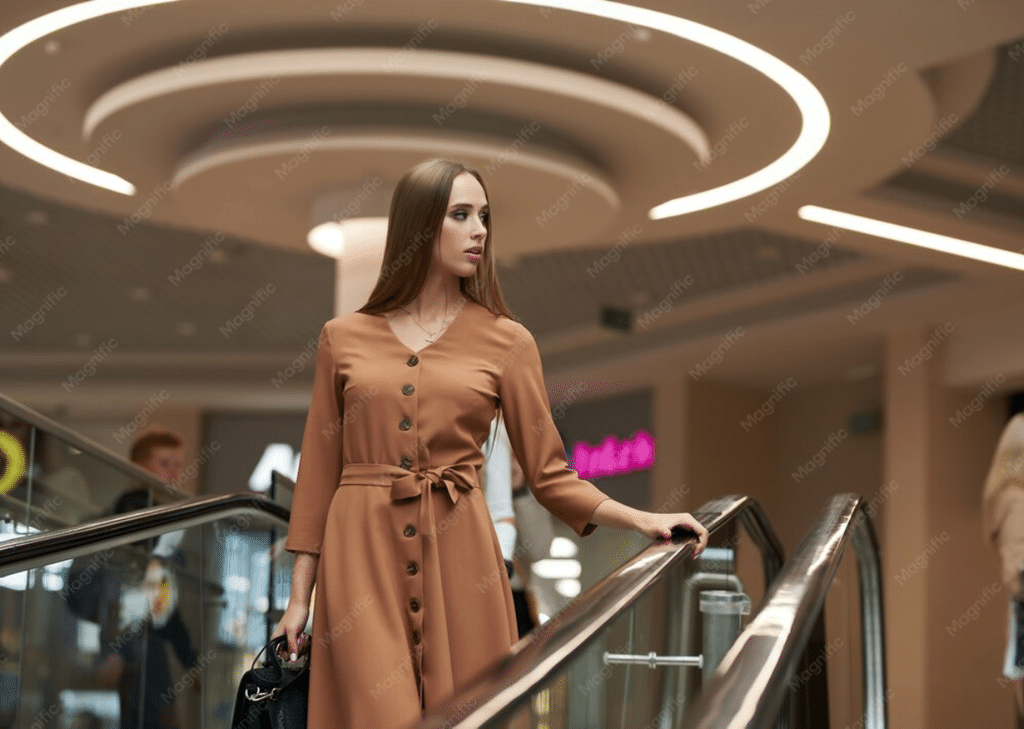
Gen Z Is Changing Traditional Fashion Retail
What is particularly Top Fashion Industry interesting is that the younger generation is now using social media as a tool to promote small and family run fashion businesses.The Financial Times recently reported that Gen Z people are sharing TikTok stories to promote their parent’s fashion brands.
The Fall 2026 Fashion Trends Show is a New Direction
Runway trends are still significant in Top Fashion Industry news as they make an impact on retail collections and on the consumers’ wardrobe.The current Fall 2026 trend for fall looks is leaning towards customized fall outfits, fall silhouettes, fall flowers, fall peplum, fall short-lengths, and fall eveningwear inspired by Art Deco.
Modern Tailoring is Back
Modern Tailoring with traditional approach. Top Fashion Industry designers are exploring casual dimensions and freer cuts of clothing as alternatives to stiff, corporate attire.This will provide you with a look that is polished but not too formal. It’s also a sign that consumers are looking for versatility.
A revival of Art Deco and Decorative Fashion
Top Fashion Industry Another intriguing direction is that of the Art Deco influence of the 1920s. Modern interpretations feature geometric details, elegant eveningwear, decorative surfaces and glamorous silhouettes.The trend demonstrates a unique instance in which fashion often draws inspiration from the past rather than replicating it.
The Fashion Weeks are still gaining momentum as they continue to grow in their reach across the world
Top Fashion Industry is getting more and more global. While the big cities of fashion still play a role, emerging markets and regional fashion weeks are gaining interest.For instance, at New Zealand Fashion Week recently, there was a significant focus on indigenous designers and Māori and Pacific-led presentations, as a central element of 2026.
The profile of regional designers is being elevated
Designer from smaller markets can be able to connect with international audiences using digital platforms instead of fully depending on traditional fashion media.
This opens up possibilities for:
• Independent designers
• Local textile producers
• Indigenous fashion communities
• Emerging luxury labels
• Small fashion businesses
• Sustainable brands
This translates to a wider choice of fashion inspiration for consumers, including one that is geographically dispersed.
More emphasis is placed on value in fashion businesses
Value is another key area of Top Fashion Industry that is gaining in significance.As the economy is uncertain, consumers are more picky. Still, they will buy fashionable things but they want things that are value for money.
What does it mean for something to have “Smart Value”?
The smart value does not necessarily mean the lowest cost product.
Rather, consumers should entertain the idea of:
• Product durability
• Material quality
• Brand reputation
• Versatility
• Resale potential
• Ethical production
• Cost per wear
This is an opportunity for Top Fashion Industry brands to prove to customers that they need to spend their money on their jersey.
The two go hand-in-hand: Sustainability and Innovation
The Top Fashion Industry and sustainability and technology are becoming more intertwined. Digital systems can be leveraged by brands to enhance the traceability, inventory, product development and supply chain visibility.Despite the global push for technology-infused, eco-friendly fashion enterprises, Hong Kong’s fashion and design industry are focusing on sustainability and innovation.
More and more transparency is becoming valuable
Consumers are increasingly interested in the origin of products, as well as how they are produced. It’s important that brands can offer transparency on materials and production so that they can establish greater trust.Transparency can then be a compliance matter, as well as a competitive one for fashion professionals.
The implications of these fashion industry news trends are for you
It is not essential to be working in Top Fashion Industry to gain an understanding of these changes.As a consumer, the most obvious way is to be more selective. Do not purchase all items that are viral, but consider quality, versatility, durability and personal style.If you are a fashion creator, make sure to create authentic stories and useful content.
Conclusion:
The Top Fashion industry news today 2026 shows an industry going through a significant transformation. There’s a rethinking of strategy for luxury brands, a change of business model for retailers, more influence from resale, and a growing focus on sustainability as a business driver.Meanwhile, AI and data is reshaping the fashion forecasting and marketing landscape. Social media remains a game-changer in trendsetters and Gen Z is giving independent and family owned fashion enterprises a new lease on life.
FAQs: Top Fashion industry news today 2026
1.So, what are the major fashion industry news trends for the year 2026?
The highlights of the major developments are luxury-market restructuring, growth in resale, AI, the adoption of sustainable Top Fashion Industry, changing retail strategies, social-commerce growth and new creative directions at major fashion houses.
2.What are the trends of fashion in 2026?
Top 2026 trends encompass modern tailoring, sculptural silhouettes, floral designs, peplum proportions, cropped shapes, decorative eveningwear and a resurgence of historical styles like Art Deco.
3.How will AI revolutionize the fashion industry in 2026?
Top Fashion Industry AI can be used to analyze customer behavior, predict demand, detect trends, assist in merchandising, tailor marketing, and aid in creative and design tasks within the fashion industry.
4. What will be the primary focus of 2026 when it comes to sustainable fashion?
Top Fashion Industry Yes. There is a greater linkage of sustainability to business strategy. Resale, repair and rental, recycling, durable products and transparency in the supply chain are now entering into the fashion industry’s circular economy.
5.Why is the Fashion industry important to social media?
Top Fashion Industry Social media platforms allow trends to be shared rapidly and brands, creators and independent retailers to have an immediate line of communication with consumers. Authentic fashion stories can also be huge drivers of customer engagement via platforms like TikTok.